

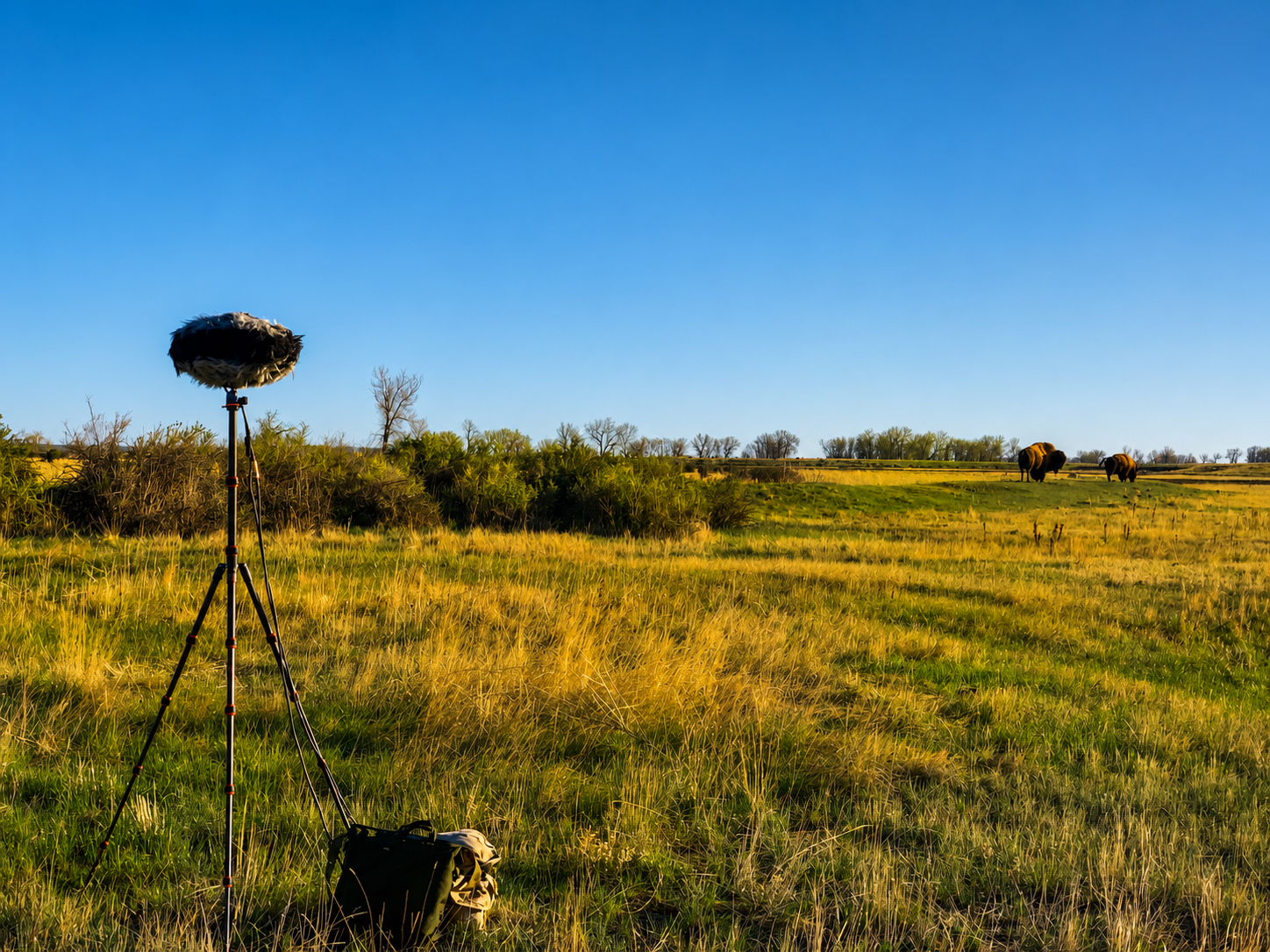
Protecting natural quiet places has become urgent work for a nonprofit warning that 97% of Americans now live within earshot of highway or aviation noise, making true silence one of Earth’s most endangered resources.
Quiet Parks International, formerly known as the One Square Inch of Silence Foundation, was founded on a warning issued more than a century ago by Nobel Prize-winning bacteriologist Robert Koch, who predicted humanity would eventually need to fight noise as urgently as disease. That prediction now drives an organization dedicated to protecting natural quiet places before they vanish entirely.
The scale of the problem is staggering. Ninety-seven percent of the U.S. population is exposed to noise from aviation and highways, according to the Bureau of Transportation Statistics, making genuine quiet nearly extinct across most of the country. Global air passenger traffic reached nearly four billion in 2017 alone, while shipping traffic grew 400% between 1992 and 2014. Perhaps most striking, an estimated 90% of children alive today will never experience natural quiet during their entire lifetime.
Protecting natural quiet places matters because noise pollution carries measurable health consequences extending well beyond mere annoyance. Prolonged exposure to loud environments can damage the inner ear’s delicate structures, leading to permanent hearing loss, an outcome affecting an estimated 17% of American teenagers who show signs of noise-induced hearing damage. Chronic noise exposure also elevates stress and anxiety, disrupts sleep patterns, raises blood pressure and cardiovascular disease risk, and impairs cognitive functions including memory and attention.
The ecological toll extends beyond human health. Noise pollution disrupts wildlife behavior, migration patterns, and communication systems that many species depend on for survival, contributing to broader biodiversity decline. Protecting natural quiet places therefore functions as habitat protection in its own right, since silence itself constitutes an increasingly scarce ecological resource many species require to thrive.
The benefits flow in the opposite direction as well. Scientific research shows that exposure to genuine silence and natural soundscapes reduces stress, improves focus and mental clarity, promotes deeper, more restful sleep, calms anxiety, and even enhances creativity by giving the mind space to wander without constant auditory interruption. For an organization built around protecting natural quiet places, these benefits form the practical case for treating silence as infrastructure worth defending rather than an incidental luxury.
Quiet Parks International pursues this mission through rigorous acoustic assessment and formal recognition programs. The organization awards Wilderness Quiet Park status to large public natural areas that meet strict noise criteria, while offering QPI Certification to private spaces such as lodges, residences, and communities that demonstrate exceptional acoustic quality. Trained field recordists conduct on-site acoustic monitoring, measuring actual soundscapes against established assessment criteria before any designation is granted.
Recent recognitions demonstrate protecting natural quiet places in action across dramatically different landscapes. In March 2026, the organization presented its Wilderness Quiet Park Award to American Prairie in Montana, where acoustic monitoring confirmed bison and silence still coexist across vast grassland. Ecuador’s Zabalo River, home to the Cofán tribe, is the world’s first certified Wilderness Quiet Park, with tribal members recording and sharing the river’s natural nighttime soundscape as what the organization describes as a sustainable natural resource exported from their home.

Protecting natural quiet places holds special significance at Ecuador’s Zabalo River, the world’s first certified Wilderness Quiet Park, where Cofán tribe members record and share the river’s natural nighttime soundscape as a sustainable resource. Photo courtesy of Quiet Parks International.
Beyond formal certification, protecting natural quiet places extends into public education and direct experience. The organization’s Urban Sound Walk Project trains volunteers to lead sound walks in their own communities, whether in a city park, along a riverbank, or through busy urban streets, helping participants notice acoustic environments they typically tune out. Virtual forest bathing experiences, inspired by the Japanese practice of shinrin-yoku, invite people worldwide to reconnect with natural soundscapes even when physical travel isn’t possible.
Co-founder Gordon Hempton, an acoustic ecologist whose methodology for identifying and measuring natural quiet has been tested and refined over five decades, anchors the organization’s technical credibility. Quiet Parks International positions itself as the first and only organization dedicated specifically to quiet conservation, distinguishing this mission from conventional noise pollution reduction efforts that typically focus on mitigating harm rather than actively preserving and celebrating silence as a positive resource worth protecting.
As global transportation, shipping, and urban development continue expanding acoustic footprints across even the most remote landscapes, protecting natural quiet places represents a race against disappearing baseline conditions. Once genuine silence vanishes from a landscape through encroaching highway noise, flight paths, or industrial activity, restoring it becomes exponentially more difficult than preserving what remains today. For Quiet Parks International, the mission carries urgency precisely because, once lost, natural quiet rarely returns.


