

Thailand hosts its first International Permaculture Convergence this November, bringing permaculture co-originator David Holmgren together with dozens of speakers for ten days of workshops and exchange.
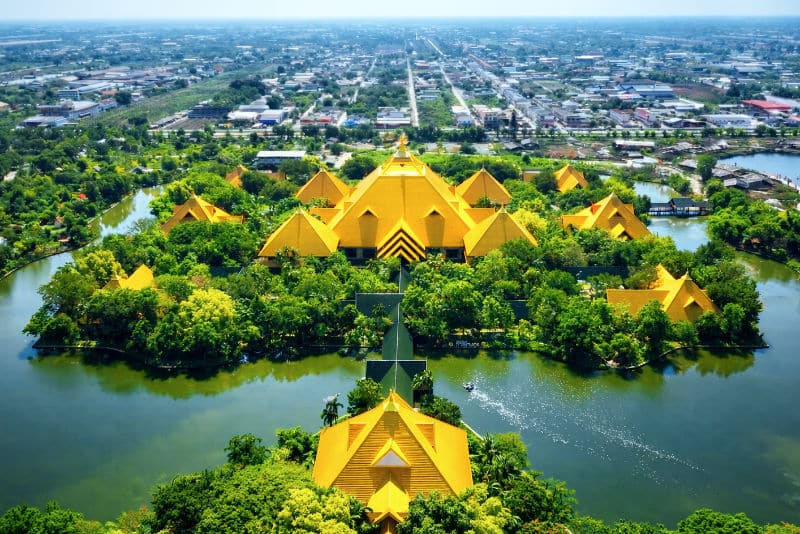
The 16th International Permaculture Convergence (IPC16), hosted by Thai Permaculture, runs November 6 through 15 under the theme “Beyond Sustainability: Many Paths,” splitting into a two-day conference at the Golden Jubilee Museum of Agriculture near Ayutthaya and a five-day convergence at Loong Choke’s bamboo farm near Khao Yai National Park. Both venues will host presentations, workshops, and discussions addressing financial, environmental, economic, and demographic resilience alongside ecosystem restoration and community building.
Kyle Holzhueter opens the conference as Day 1 keynote, drawing on over 20 years bridging Western permaculture and traditional Japanese building craft. A graduate of the Kyoto Plastering Institute and the first Westerner in Japan to pass the highest level Japanese National Plastering Exam, Holzhueter specializes in no-till rice cultivation, agroforestry, natural plasters, and energy efficiency. David Holmgren, who co-originated permaculture with Bill Mollison and distilled the discipline into its twelve design principles, delivers the Day 2 keynote by video, offering what organizers describe as a rare thread connecting the region’s farms, food forests, and seed networks back to the movement’s source.
Additional speakers span remarkably diverse territory. Catherine Austin Fitts, publisher of The Solari Report, developed Financial Permaculture, integrating Mollison’s ecological models with financial strategies built around her Eight Forms of Capital framework to expand wealth beyond money into interchangeable assets essential for resilient communities. Manish Jain, co-founder of the Ecoversities Alliance and Swaraj University in Udaipur, brings decades of work decolonizing education and advocating unlearning through Shikshantar Andolan. Jon Jandai, founder of Northern Thailand’s Pun Pun self-reliance center, whose TEDx talk “Life is Easy. Why Do We Make It Hard?” has surpassed five million views, questions modern cycles of earning and consumption.
Thalea Tane, an indigenous leader from Aotearoa New Zealand, moderates the conference’s “Weaving Together the Threads of Wisdom” panel exploring shared strands between permaculture and indigenous traditions. She has project-managed ecological restoration across Oceania and Southeast Asia while aligning her work to Te Tiriti O Waitangi and Mātauranga Māori,
Padma Koppula, co-founder of India’s 17-year-old Aranya Agricultural Alternatives, which hosted the International Permaculture Convergence in 2017 and has facilitated rainwater harvesting and vegetative plantings across 37,500 acres under India’s national watershed program, joins that same panel. Robin Clayfield, an acknowledged Permaculture Elder who has lived at Crystal Waters Permaculture EcoVillage in Queensland for over 38 years and practiced permaculture and Deep Ecology for 43 years, leads closing sessions on social permaculture and community governance.
Conference Day 1 features parallel sessions on Thai models of resilience, natural building coordinated by Neil Willmann, and Thai-language introductions to permaculture. Day 1 afternoon adds sessions on food security, Ecoversities and Permaculture with Manish Jain, and commons-based community stewardship. Day 2 parallel tracks explore free and inspired living with Catherine Austin Fitts; urban permaculture featuring Bangkok rooftop farming practitioners; humanitarian applications, including Permaculture for Refugees; Wanakaset rubber forest gardening transformation; and design responses to the fossil-fuel-based crisis.
At the Convergence, six parallel spaces run daily, three for presentations and two for hands-on demonstrations plus one outdoor activity area. Confirmed workshops span an extraordinary range: stingless beekeeping, bamboo building led by host Loong Choke himself, compost-making from food scraps and plant materials, biochar production using just a hoe and match, insecticide soap from used cooking oil, and swale construction detailed by Australian permaculture teacher Danial Lawton. Andrew Millison, whose permaculture films have surpassed 100 million views, joins Loong Choke to welcome participants on opening day.

Following the conference, the International Permaculture Convergence continues at Suan Loong Choke Bamboo School, where host Loong Choke and filmmaker Andrew Millison open five days of participant-led workshops spanning bamboo building, fermentation, natural plastering, and community discussion across 150 session slots. Photo courtesy of Thai Permaculture.
Thematic threads run throughout the five-day International Permaculture Convergence. Post-apocalyptic survival sessions cover foraging plants and medicinal herbs identified by Thai agroforesters. A running “crash/refreshing session on permaculture” led by Vitoon Panyakul repeats across multiple days for newcomers. Sessions on carbon and rice farming, learning center design, youth engagement, and food sovereignty draw speakers from Malawi, Indonesia, India, Canada, and Australia. A world café on permaculture education, facilitated by Taiwan’s Hui-i Chiang, spans three consecutive mornings. The gathering closes with Robin Clayfield’s sessions on growing community and translating convergence energy into future action.
Throughout the International Permaculture Convergence, a Farmers Market and Expo runs continuously at the Museum venue, gathering organic produce, herbal remedies, Thai massage practitioners, and local wisdom-keepers from across the country. The Convergence itself unfolds across kitchens, meeting rooms, and open-air learning spaces at Suan Loong Choke Bamboo School, designed explicitly for participation over passive listening.
Registration for the International Permaculture Convergence starts at 6,950 THB (US$____)for the conference and 18,000 THB (US$____) for the convergence, with concessionary rates of 5,000 THB (US$____) and 13,000 THB (US$____) respectively available to residents of Thailand, Southeast Asia, South and East Asia, the Pacific Islands, Africa, and Latin America. Students receive half-price conference tickets, while children ages 0 to 5 attend both events free. Groups of five or more paying adults receive a 10% discount, and those wishing to sponsor a changemaker’s attendance can contribute to a dedicated travel subsidy fund.
Accommodation options span dormitory-style lodging at the Museum for up to 150 people on a first-come basis, nearby hotels, and on-site camping at the convergence with tent rental available. For those attending both events, the bus connecting the two venues runs free of charge.
Ahead of the main event, permaculture pioneer Rosemary Morrow leads a seven-day Teacher Training at Daruma Eco-farm from October 29 through November 4, with participants then continuing onward to join the International Permaculture Convergence, receiving an additional discount for booking both experiences together.
For a movement rooted in working with nature rather than against it, hosting the International Permaculture Convergence in Thailand carries particular resonance. The country’s own Sufficiency Economy Philosophy and Wanakaset agroforestry tradition, shaped by generations of integrated land wisdom, now meet the global permaculture movement, creating what organizers describe as ten days of genuine exchange between two streams of ecological knowledge converging for the first time on Thai soil.


