


Elke Kayle Cadangen turned her late mother’s frugal habits into a zero-waste refill store confronting the Philippines’ sachet culture, one container at a time.
In the Philippines, the practice of tingi has become a way of life, a culture where individuals purchase in small quantities, often limited to single-use items like shampoo sachets or condiment pouches. This practice, born out of budget constraints, has seeped into both local neighborhood stores and corporate consumerism. While providing a means for families to manage daily expenses, it has unintentionally fueled the plastic sachet and single-use plastic industry, creating an environmental dilemma.
Addressing this issue head-on in Baguio City is a zero-waste refill store called Tingi Station, which opened its doors in January 2022. Founded as a family business, the concept was nurtured in late 2020 as a response to the environmental impact of the prevalent tingi and sachet culture. Owner Elke Kayle Cadangen draws inspiration from her late mother, a zero-waste practitioner ahead of her time who used food waste as fertilizer, kept and reused containers, and carried eco bags while shopping. What Cadangen and her siblings once saw as hoarding, they grew to understand as a deliberate philosophy: every piece of waste holds potential to be reused again.
The founders’ motivation was further fueled by environmental challenges facing Baguio City, including limited waste management infrastructure and the high costs associated with waste transfer. Recognizing the detrimental impact of excessive waste generation on their community, the family built a zero-waste refill store designed to offer sustainable shopping options while educating and inspiring the broader community to embrace waste reduction.
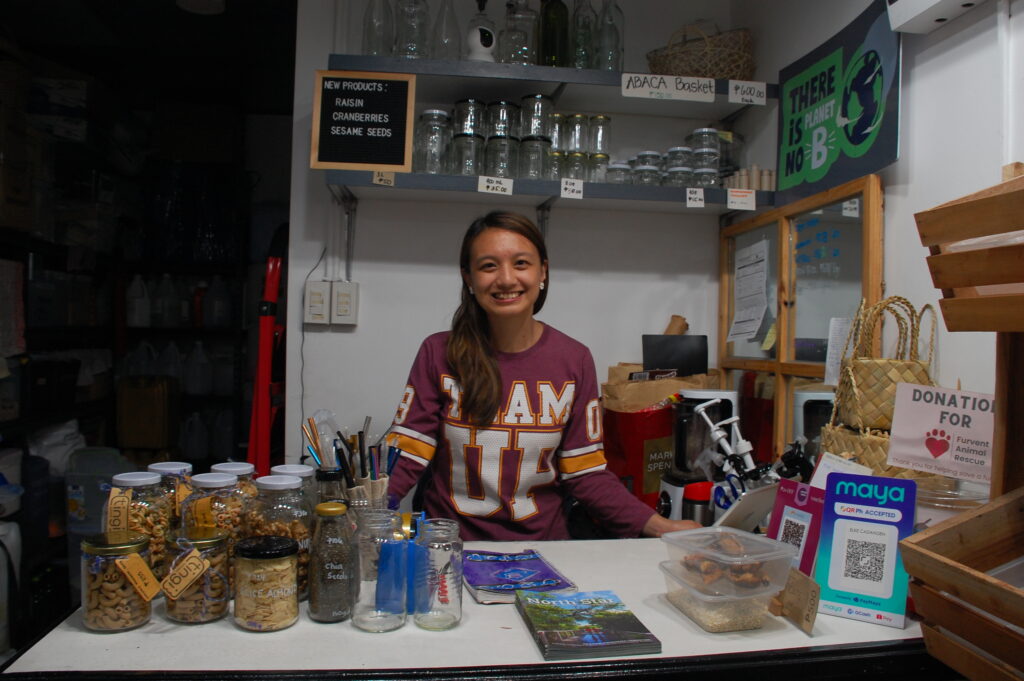
Owner Elke Kayle Cadangen built her zero-waste refill store on lessons learned from her late mother, who reused containers, composted food waste, and carried eco bags decades before zero-waste living became a recognized movement in the Philippines. Photo by Lira Maranan.
Located along Tecson Street in Barangay Salud Mitra, with a branch at Kayang Street in the city market, Tingi Station offers a diverse range of refillable products. Pantry staples like rice, flour, and sugar sit alongside personal care items such as shampoo, soap, and lotion. Household essentials including cleaning, laundry, and dishwashing soaps are available, along with cooking basics like soy sauce, vinegar, fish sauce, assorted oils, loose-leaf teas, snacks, nuts, and eco-friendly alternatives like metal straws and reusable menstrual cups and pads.
By offering products in refillable containers, the zero-waste refill store actively reduces demand for single-use plastics, lessening the burden on landfills and cutting down pollution of oceans and ecosystems. The store’s model directly challenges the culture of dependency on sachets and single-use packaging, breaking the cycle of wasteful consumption patterns ingrained in daily life.
Sourcing sustainable and affordable products poses ongoing challenges, requiring a supply chain committed to zero waste, fair trade practices, and consistent delivery of high-quality items. Tingi Station meticulously selects suppliers who align with its core values of sustainability, affordability, and quality, focusing on organic, chemical-free products. The commitment extends beyond store shelves to packaging and transportation methods, minimizing overall environmental impact throughout the supply chain.
Partnerships with small-scale local suppliers reinforce this commitment. Tingi Station arranges for suppliers to remove individual packaging from ordered items, and containers used for delivery are returned to suppliers for reuse in future orders. This approach drives waste-reduction awareness not just among consumers but throughout the supplier relationship itself.
Recognizing the importance of community involvement, the zero-waste refill store provides donated containers that are cleaned and sanitized for shared use. The availability of community containers encourages a sharing economy, allowing customers to use shared resources rather than purchasing individual containers and promoting collective responsibility for the environment.
Since its inception, Tingi Station has saved an impressive 10,000 containers from becoming waste, providing concrete evidence of its contribution to reducing packaging waste and landfill accumulation. The store’s emphasis on container reuse extends its commitment to waste reduction beyond its own walls, encouraging a culture of resource conservation and circular economy principles throughout Baguio City.
The zero-waste refill store resonates particularly with students working within limited budgets. Buying products per gram allows them to purchase exactly what they need for the week rather than being forced into full bottles or whole pouches that drain their allowance without completing their shopping list. This gram-by-gram approach helps students budget more effectively while still accessing everything required for daily living.
Community engagement remains integral to Tingi Station’s mission. The store shares its business model with local communities, participates in eco fairs, and has developed plans for a database tracking container refills and customer growth, alongside a membership program monitoring individual environmental impact. Future plans include a delivery system through an app and collaborations with local community stores more commonly known as sari-sari stores, extending the zero-waste refill store’s reach beyond its physical locations.
Persuading a broader market to shift away from plastic dependence remains a significant challenge. Convincing individuals to embrace zero-waste principles requires innovative strategies and sustained community education. Tingi Station’s approach centers on starting with what individuals can control, encouraging people not to feel discouraged by limited individual impact, since collective effort compounds into meaningful change over time.
In challenging the prevalent tingi and sachet culture, this zero-waste refill store stands as inspiration for change, offering not just products but a philosophy of mindful consumption, responsible living, and commitment to a future where waste is minimized. Tingi Station is rewriting Baguio City’s relationship with plastic, one refill at a time.


