


Cambridge researchers have demonstrated solar-powered plastic-to-hydrogen technology working outdoors at a real-world scale.
Solar-powered plastic-to-hydrogen technology just cleared a major hurdle. Researchers at the University of Cambridge have shown that a solar reactor can turn plastic waste into clean hydrogen fuel outdoors, at a scale close to commercial use.
This marks the first time solar-powered plastic-to-hydrogen conversion has worked outside a laboratory using methods built for scale. The team tested the system under natural sunlight outside Cambridge’s Chemistry Department this year, moving the technology out of controlled lab conditions for the first time.
Earlier versions of the technology proved the concept but stayed small. The original solar-powered plastic-to-hydrogen reactor measured about 25cm square, roughly the size of a dinner plate, and could only be tested indoors under artificial light.
The new device measures about 1 meter square, a sixteen-fold jump in surface area. That size increase marks a real step toward panels that could one day sit on rooftops, waste facilities, or industrial sites, turning everyday plastic trash into fuel on location.
Unlike a standard solar panel, this device does not generate electricity. Instead, sunlight drives a chemical reaction that breaks down plastic waste while splitting water molecules, a process very different from how conventional solar power works.
That reaction releases clean hydrogen, a fuel that produces no carbon emissions when used. The process also creates valuable industrial chemicals as a byproduct, giving the same batch of plastic waste two useful outputs instead of one.
Previous solar reactor designs required high heat, harsh chemicals, or complex manufacturing steps. Most relied on tiny catalyst particles, materials that speed up chemical reactions, suspended in liquid and deposited by hand onto a surface, a method that worked only in small, controlled batches.
That approach worked at small scale but could not scale to industrial vats of solution. Researchers needed a simpler, more practical build method before solar-powered plastic-to-hydrogen systems could leave the laboratory bench.
The Cambridge team solved this with a two-step coating process. A light-absorbing material is sprayed onto a glass panel first, then coated with molecules built from cobalt and zirconium, two metals chosen for their catalytic properties and their ability to hold up outdoors.
The spraying itself uses equipment similar to a household paint sprayer. The whole process happens at room temperature, without specialized lab equipment, which keeps manufacturing costs low and the technique easy to repeat at larger sizes.
Researchers on the project said the simplicity surprised them after months of fine-tuning. They described spraying the catalyst directly onto the panel, placing it in solution, and setting it in the sun to produce hydrogen and other valuable chemicals from plastic waste.
The reactor already works on more than one type of waste. Tests confirmed it processes both cellulose, a plant-based material, and polyethylene terephthalate, or PET, the plastic used in most fizzy drink bottles, showing that solar-powered plastic-to-hydrogen technology is not limited to a single feedstock.
That versatility matters because plastic waste streams rarely contain just one material. A reactor that handles multiple waste types fits more easily into existing recycling systems and municipal waste sorting lines.
For context, global plastic production now tops 400 million tonnes a year, and only a small share of that waste is actually recycled through conventional methods. Every ton diverted into a solar-powered plastic-to-hydrogen reactor is a ton that avoids landfill, incineration, or the ocean.
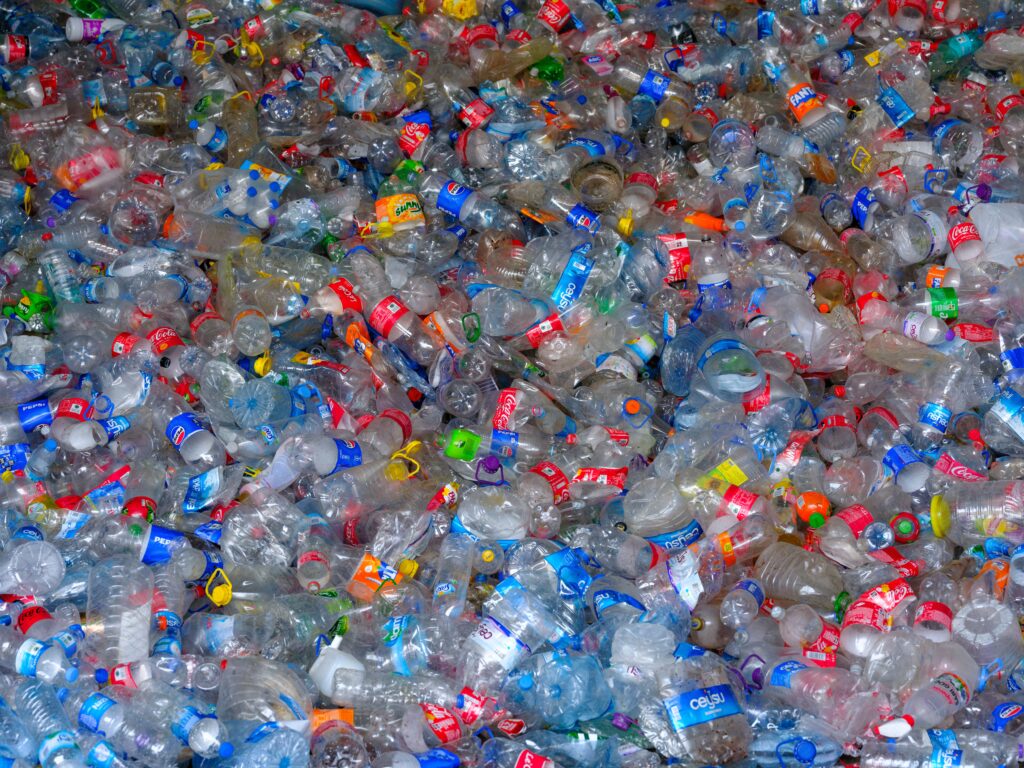
With global plastic production topping 400 million tonnes a year and only a fraction recycled through conventional methods, solar-powered plastic-to-hydrogen technology offers a compelling alternative where every ton of waste diverted into a solar reactor is a ton kept out of landfills, incinerators, and the ocean. Photo by Engin Akyurt on Pexels.
The team also completed a cost analysis showing what it would take to scale the technology commercially. Researchers say this kind of practical cost accounting is uncommon for early-stage clean energy research and gives investors a clearer picture of what solar-powered plastic-to-hydrogen production could cost at full size.
The spray-coating method sharply cuts production costs compared to older techniques. Lower costs matter because affordability often decides whether promising lab technology reaches real-world use rather than staying a novelty.
Some work remains before the panels reach the market. Researchers say they still need to improve how long the panels last and how efficiently they convert plastic waste into hydrogen, since durability under repeated sun exposure and weather is different from a single outdoor test.
A patent for the technology has been filed through Cambridge Enterprise, the university’s innovation arm. Funding came in part from the UK Department of Science, Innovation and Technology, the Royal Academy of Engineering, and Petronas, and the full findings appear in the journal Nature Chemical Engineering.
Plastic pollution and clean energy production often get treated as separate problems. This research links both, turning waste destined for landfills or oceans into a fuel that powers homes, vehicles, or industry, while also producing useful industrial chemicals along the way.
Scaling any lab breakthrough to commercial size is difficult, and this technology still needs refinement. But a reactor that runs on sunlight, processes everyday plastic waste, and produces clean fuel outdoors represents genuine progress toward practical, affordable solar-powered plastic-to-hydrogen systems.




Very exciting news.
I wonder if it can convert Polylatic acid (PLA) a plastic commonly used by FDM 3-D Printers (IE: ME) and yes I have a few KG of waste I plan to re-use soem day.