A free national challenge focused on rewilding backyards with native plants has inspired more than 27,000 participants to transform their lawns into wildlife habitat.
For decades, the traditional American lawn has been a symbol of homeownership. Millions of homeowners spend time, money, and resources maintaining large stretches of grass that often provide little value for wildlife. A growing movement, however, is encouraging people to rethink their yards. Through rewilding backyards with native plants, thousands of Americans are transforming ordinary lawns into thriving habitats that support birds, pollinators, and other wildlife.
At the center of this movement is the Less Lawn More Life Challenge, a free 12-week program designed to help participants gradually convert portions of their outdoor spaces into healthier ecosystems. Since its launch, the initiative has attracted 27,412 participants who have collectively committed to rewilding 61,576 acres of land across the United States. Participants have also recorded more than 160,000 wildlife observations, demonstrating the ecological impact that small actions can create when multiplied across thousands of households.
The concept behind rewilding backyards with native plants is straightforward. Instead of maintaining large areas of turf grass, homeowners introduce native flowers, shrubs, trees, and groundcovers that evolved alongside local wildlife. Native plants provide food, shelter, and breeding habitat for insects, birds, and other animals that often struggle to survive in heavily landscaped environments. By restoring even small patches of habitat, homeowners can contribute to biodiversity conservation directly from their own properties.
Participants in the Less Lawn More Life Challenge receive weekly guidance delivered through email. Each challenge focuses on a manageable action, such as planting a native species, identifying invasive plants, creating habitat features, or observing wildlife. The goal is to make ecological restoration accessible to people regardless of their experience level, available space, or gardening knowledge. Even balconies, small urban yards, and community gardens can participate.
A key feature of the program is the Wildr Score, a free ecological assessment that helps participants evaluate the health of their outdoor spaces. The assessment measures factors that influence biodiversity and habitat quality. Participants can compare their scores before and after completing the challenge, providing a tangible way to track progress and understand how small changes can improve ecosystem health.
The movement reflects growing scientific interest in the role residential landscapes can play in conservation. Urbanization and habitat fragmentation have reduced the amount of natural habitat available to wildlife across North America. While individual yards may seem insignificant on their own, collectively they represent millions of acres of land. Conservationists increasingly recognize that rewilding backyards with native plants can create interconnected habitat corridors that support pollinators, birds, and other species across entire communities.
Native plants offer additional benefits beyond supporting wildlife. Because they are adapted to local conditions, many require less irrigation, fertilizer, and maintenance than conventional turf grass. Deep root systems can improve soil health, reduce erosion, and help absorb stormwater. These advantages make native landscaping appealing not only for conservation but also for homeowners seeking lower-maintenance outdoor spaces.
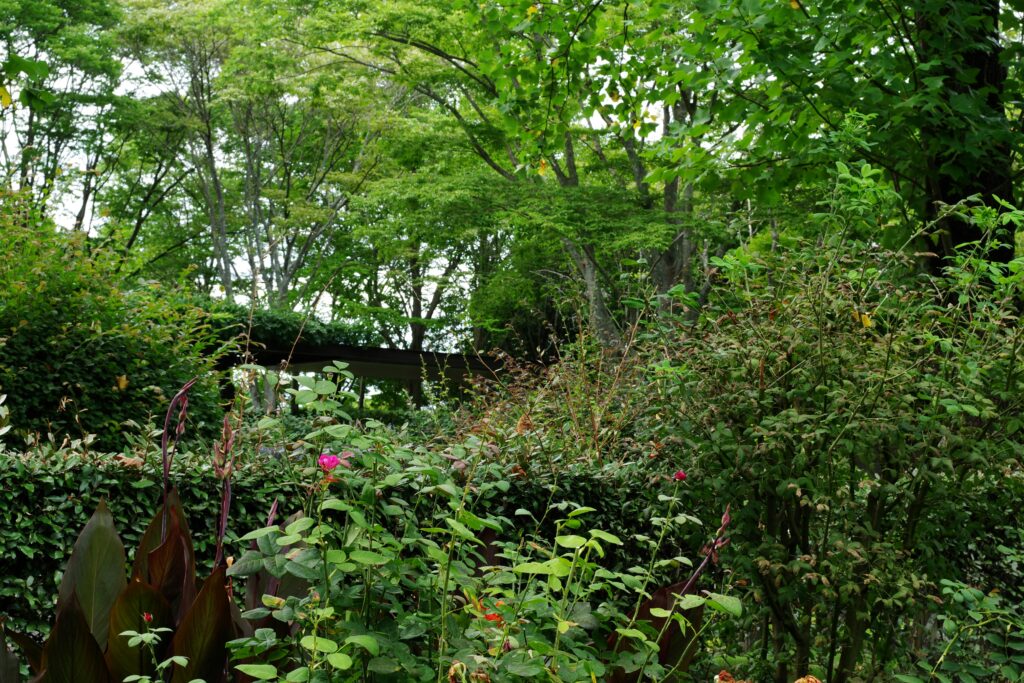
Rewilding backyards with native plants offers benefits beyond wildlife support, as locally adapted species require less irrigation, fertilizer, and maintenance than turf grass while deep root systems improve soil health, reduce erosion, and absorb stormwater. Photo by Naoki Suzuki on Unsplash.
The challenge has attracted support from a broad network of conservation organizations, ecologists, and educators. Participants learn from experts in ecology, horticulture, forestry, and wildlife conservation who provide practical guidance throughout the program. The initiative also highlights the importance of community engagement, encouraging participants to share experiences and inspire neighbors to adopt similar practices.
Many participants report seeing noticeable changes shortly after beginning the process. Native flowers attract bees and butterflies, while shrubs and trees provide nesting and feeding opportunities for birds. These visible results help reinforce the idea that ecological restoration does not require massive land acquisitions or large-scale projects. Meaningful conservation can begin with a single garden bed, a native shrub, or a small patch of converted lawn.
Challenges remain, of course. Converting lawns takes time, and some homeowners face restrictions from neighborhood associations or local regulations. Native plant availability can also vary by region. Nevertheless, growing participation suggests that many people are eager to find practical ways to support biodiversity close to home.
As concerns about biodiversity loss and habitat fragmentation continue to grow, rewilding backyards with native plants offers an accessible solution that anyone can participate in. The success of the Less Lawn More Life Challenge demonstrates how thousands of small actions can add up to meaningful environmental change. By replacing portions of traditional lawns with habitat-rich landscapes, homeowners across America are helping create healthier ecosystems one yard at a time.