


A wildlife bridge connecting national parks in Australia is helping wildlife safely move between habitats separated by a major highway south of Sydney.
Roads and highways help connect human communities, but for wildlife, they often create dangerous barriers that divide habitats and isolate animal populations. In Australia, conservationists are increasingly looking for ways to reconnect fragmented ecosystems. One innovative solution is now taking shape south of Sydney, where a wildlife bridge connecting national parks in Australia is helping native species safely cross a busy motorway for the first time in decades.
The project centers on Cawleys Bridge, a structure spanning the Princes Motorway between Heathcote National Park and Royal National Park. Rather than constructing an entirely new crossing, conservation planners retrofitted an existing bridge to create a dedicated wildlife corridor. The goal is simple but important: reconnect habitats that were split when the motorway cut through the landscape, allowing animals to move more freely between protected areas.
The wildlife bridge connecting national parks in Australia has been carefully designed to accommodate a variety of species. Vegetated pathways provide suitable cover for animals such as koalas, while rope crossings help arboreal species like gliders move above the roadway. Ground-level corridors allow wombats, echidnas, reptiles, and other animals to safely travel between habitats without encountering traffic.
Habitat fragmentation is one of the less visible threats facing wildlife around the world. Even when large areas of habitat remain protected, roads can separate populations, making it harder for animals to find food, mates, and new territories. Over time, isolated populations may become more vulnerable to disease, genetic decline, and environmental change. Wildlife crossings help restore these connections and improve long-term ecosystem health.
The location of the bridge is particularly significant because it links two important protected areas in New South Wales. Heathcote National Park and Royal National Park contain valuable habitat for koalas and many other native species. By reconnecting these landscapes, conservationists hope to create a larger, more resilient wildlife corridor that supports population growth and movement across the region.
Koalas are among the species expected to benefit most from the project. Habitat loss and fragmentation remain major challenges for koala conservation throughout Australia. When populations are separated by roads and urban development, animals face greater risks as they attempt to move between habitat patches. The wildlife bridge connecting national parks in Australia offers a safer alternative, reducing the likelihood of vehicle collisions while improving access to food and breeding areas.
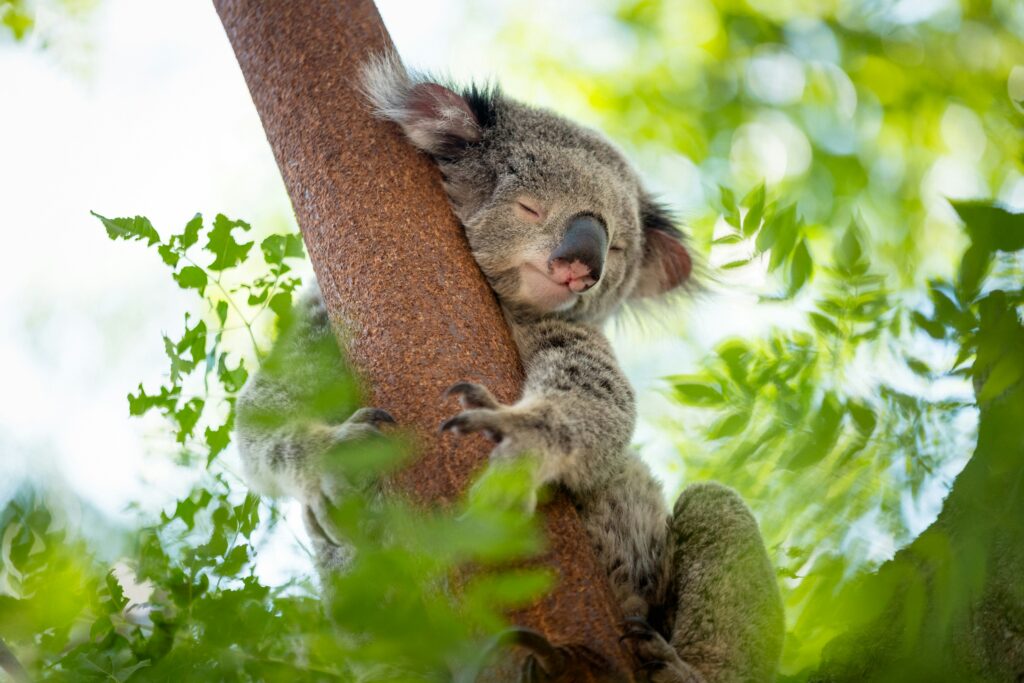
The wildlife bridge connecting national parks in Australia offers koalas and other wildlife a critical lifeline, providing a safer alternative to crossing a busy motorway as habitat loss and fragmentation continue to threaten a species already struggling with the consequences of roads and urban development cutting through their home range. Photo by Michael Williams II on Unsplash.
The crossing is also designed for lesser-known species, including quolls, gliders, and small mammals that play important roles in healthy ecosystems. Different animals move through landscapes in different ways, which is why the bridge incorporates multiple crossing features rather than relying on a single design. This multi-species approach reflects a growing understanding that effective conservation infrastructure must accommodate a wide range of wildlife behaviors.
Monitoring will play an important role in determining the project’s long-term success. Conservationists are using cameras, drones, and other tracking technologies to observe how animals interact with the crossing. The data will help researchers understand which features are most effective and guide the development of future wildlife corridors across Australia.
Wildlife crossings have already proven successful in many parts of the world. Studies have shown that well-designed overpasses and underpasses can significantly reduce wildlife-vehicle collisions while improving habitat connectivity. As climate change and human development continue to reshape natural landscapes, these structures are increasingly viewed as essential conservation tools rather than optional additions to infrastructure projects.
Challenges remain, including the need for ongoing maintenance and broader habitat protection beyond the crossing itself. A bridge alone cannot solve every conservation problem. However, reconnecting fragmented landscapes is an important step toward helping wildlife adapt and thrive in a changing world.
As animals begin using the crossing to move between Heathcote and Royal National Parks, the project offers a hopeful example of how infrastructure and conservation can work together. This wildlife bridge connecting national parks in Australia demonstrates that even existing structures can be reimagined to support biodiversity, creating safer pathways for wildlife while strengthening the ecological health of entire regions.


