

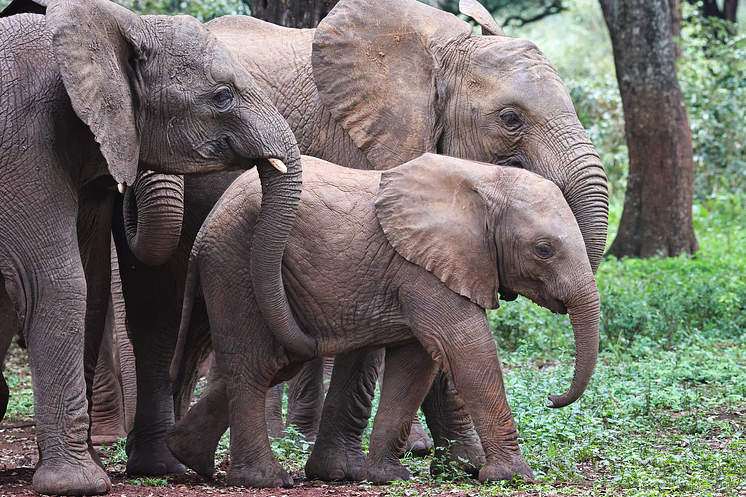
Baby elephant rescue Zuri has thrived for months at the Sheldrick Wildlife Trust’s Nairobi Nursery after nearly drowning in a septic tank in Kenya.
Baby elephant rescue stories rarely end as well as Zuri’s. Found trapped inside a septic tank near Voi Safari Lodge in Kenya when she was just days old, the calf has spent the past months recovering at the Sheldrick Wildlife Trust’s nursery in Nairobi. Keepers now describe a confident, food-driven toddler who has already claimed the role of herd princess.
Rescuers worked late into the night to free Zuri from the tank, a traumatic ordeal for any elephant calf, let alone one only days old. After a night of stabilization at the Trust’s nearby Voi facility, she was flown to the Nairobi Nursery for round-the-clock care.
The Nairobi Nursery is the first stop in a rehabilitation journey that can stretch for more than a decade. Orphaned elephants typically arrive after losing their mothers to poaching, drought, conflict, or accidents like Zuri’s. Keepers assign each calf a dedicated human caregiver who stays close around the clock, standing in for the mother an orphan has lost.
Each baby elephant rescue brings its own logistical demands. Calves depend on a specialized milk formula that took decades of trial and error to perfect, since cow’s milk alone proved fatal to earlier generations of rescued elephants. Round-the-clock bottle feeding, veterinary monitoring, and a rotating team of keepers all continue for months or years after a calf first arrives.
Within days of arriving, Zuri settled into the nursery herd and quickly displaced an older calf as the group’s most doted-on member. Several older orphans now compete to shepherd her around, with one in particular walking her into her stable each evening for weeks, until Zuri felt ready to go in alone.
Keepers describe Zuri as anything but timid. She reportedly bangs on her stable door the moment she hears a wheelbarrow of milk bottles approaching at night, and sprints toward keepers with her trunk raised during the day, visibly displeased if a bottle isn’t ready and waiting. She has even tried stealing bottles from an older herd mate after finishing her own.
Despite her boldness, Zuri shows a softer side around the nursery’s newest arrival, a recently rescued calf not yet publicly introduced. Keepers say Zuri doesn’t treat the newcomer as a rival the way she does with some of the older toddlers, a distinction they see as a promising sign of her continued emotional development.

Bold enough to bang on her stable door at feeding time and steal milk bottles from herd mates, Zuri also shows a gentler side with the nursery’s newest arrival, a sign keepers read as promising emotional growth in the baby elephant rescue. Photo courtesy of Sheldrick Wildlife Trust.
Not every trace of the ordeal has faded. Zuri remains wary of unfamiliar people and some of her own keepers, a caution the Trust attributes to her brush with drowning and the fear she experienced during the traumatic rescue. Recovery from early trauma varies widely between individual elephants, and keepers say patience, gentle care, reassurance, and close observation, rather than a fixed timeline, guide each calf’s progress. Over time, they hope Zuri will continue building confidence and feel increasingly secure in her new environment.
Zuri’s progress reflects decades of institutional experience behind this kind of baby elephant rescue work. The Sheldrick Wildlife Trust has run its elephant rescue and rehabilitation program since the 1970s, hand-raising hundreds of orphans and successfully returning most to wild herds in Tsavo.
Public support directly funds this kind of work. Individual donors can foster a specific orphan, supporting a program that covers keeper salaries, milk formula, and veterinary costs for calves like Zuri. That funding model has let the Trust scale its operations even as new rescue calls keep coming in from across Kenya.
Around three years old, Zuri will eventually graduate from the nursery to one of the Trust’s reintegration units in Tsavo, following the same path generations of orphans before her took. For now, her days are filled with milk, mischief, and the attention of a devoted entourage of nannies. For a calf whose baby elephant rescue began three months ago with a near-drowning in a septic tank, that counts as a very good life.


